AI's real bottleneck is a power socket
Data-centre electricity demand is outrunning the grid. Builders already feel it in rate limits, regional premiums and capacity rationing, and efficiency is turning into a feature.

The short answer
AI growth is now limited by electricity and grid connections at least as much as by chips: a new chip fab takes about two years, a grid connection can take five to ten. Builders feel it as shifting rate limits and regional price premiums.
Key takeaways
- The IEA says data-centre electricity demand grew 17% in 2025 to 485 TWh, AI-focused data centres grew 50%, and global electricity demand grew about 3%.
- Gartner forecasts data-centre electricity use of 565 TWh in 2026, up 26% from 447 TWh, with AI-optimised servers overtaking conventional servers in 2027.
- Chips are still tight (high-bandwidth memory is short until at least end-2027), but power is slower to fix: transformers take two to three years, gas turbines about five, grid connections five to ten.
- Builders already see it: Anthropic cut peak-hour session limits in March 2026, then raised limits in May after adding 300+ MW of compute, and regional Claude endpoints on Bedrock and Google Cloud carry a 10% premium.
- Energy per AI task is falling fast (Google measured a 33x drop per median Gemini prompt in a year), but heavier reasoning and agent workloads and rising usage keep total demand climbing.
- Efficiency is becoming a product feature: task-aware routing, caching, batching and fewer agent steps buy headroom under rate limits, lower bills and better latency.
The AI race is now gated by electricity, grid connections and the heavy kit that delivers them, at least as much as by chips, and you can already see it in rate limits, regional price premiums and “demand exceeds supply” lines on earnings calls. Chips are a two-year problem; a grid connection can be a five-to-ten-year problem, which is why the cheapest, most available AI in 2027 will belong to whoever wastes the fewest watts per task.
The real bottleneck in the AI race. Photo: Jan van der Wolf / Pexels
For most of the last three years, the AI supply story was a GPU story. Who has the chips, who’s on the waitlist, who’s begging Nvidia for allocation. That story isn’t over (more on memory in a minute), but a less glamorous one has crept up behind it. You can buy a GPU in months. You can’t buy a substation in months.
This matters to you even if you’ll never set foot in a data centre. If you ship anything on top of a model API, your rate limits, your regional pricing and your bill are downstream of a grid somewhere. Let’s look at the numbers, then at what they mean for people building products.
The numbers in one chart
Two primary sources do most of the heavy lifting here: the IEA’s Key Questions on Energy and AI, published on 16 April 2026, and Gartner’s data-centre power forecast, released on 10 June 2026.
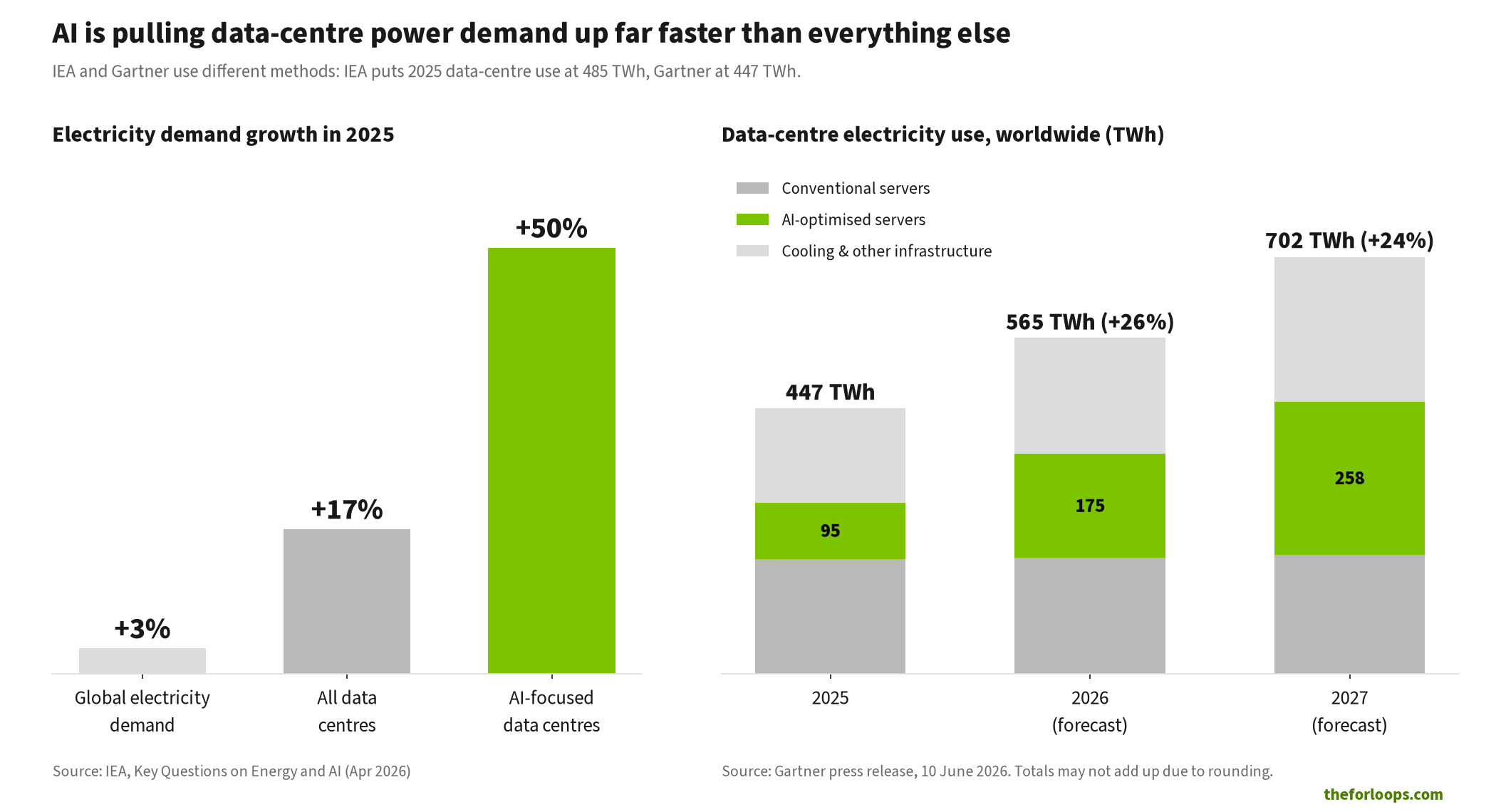
Chart: theforloops. Data: IEA, Key Questions on Energy and AI (April 2026); Gartner press release (10 June 2026).
What the IEA says. Global data-centre electricity demand grew 17% in 2025. Demand from AI-focused data centres grew even faster, “surging 50% in 2025.” For context, global electricity demand as a whole grew about 3%. The IEA puts total data-centre consumption at 485 TWh in 2025 and expects it to roughly double to 950 TWh by 2030, around 3% of the world’s electricity. AI-focused data centres triple over the same period.
What Gartner says. Gartner forecasts worldwide data-centre electricity consumption of 565 TWh in 2026, up 26% from 447 TWh in 2025, then 702 TWh in 2027. The engine is obvious from its own table: AI-optimised servers go from 95 TWh in 2025 to 175 TWh in 2026 (31% of the total) and 258 TWh in 2027, when Gartner expects them to overtake conventional servers. Conventional servers, meanwhile, barely move: 193, 195, 200 TWh.
What the data doesn’t say. Two honest caveats before anyone screenshots the chart:
- The two sources don’t agree on the baseline. The IEA has 2025 at 485 TWh; Gartner has 447 TWh. Different models, different boundaries. Don’t mix their numbers into one trend line, which is why the chart keeps them in separate panels.
- The 26% is energy, not capacity. Gartner’s 26% is consumption (TWh). Its separate capacity figure, power demand in gigawatts, rises 27% to 132 GW in 2026, from 104 GW. Gartner sees that reaching 290 GW by 2030, while the IEA’s 2030 consumption number (950 TWh) is well below Gartner’s “over 1,200 TWh.” Forecasters disagree on how steep the curve is, not on its direction.
Why power, not chips, is the constraint now
Let’s be fair to the chip story, because the brief I started from said power matters “more than chips,” and that’s too neat. The IEA says high-bandwidth memory became “a binding constraint on the rate of AI server production” in late 2025 and early 2026, with memory prices up by an order of magnitude between late 2024 and early 2026 and the shortage expected to last until at least the end of 2027. Microsoft’s latest earnings call talks about “higher memory and storage costs” in its capex too. Silicon is still tight.
The difference is how long each problem takes to fix. The IEA notes it takes about two years to bring a new chip factory online. Now compare the energy side, from the same report:
- Transformers: average lead times of two to three years.
- Gas turbines: deliveries could take around five years.
- Grid connections: waits “can be as long as five to ten years in many jurisdictions.”
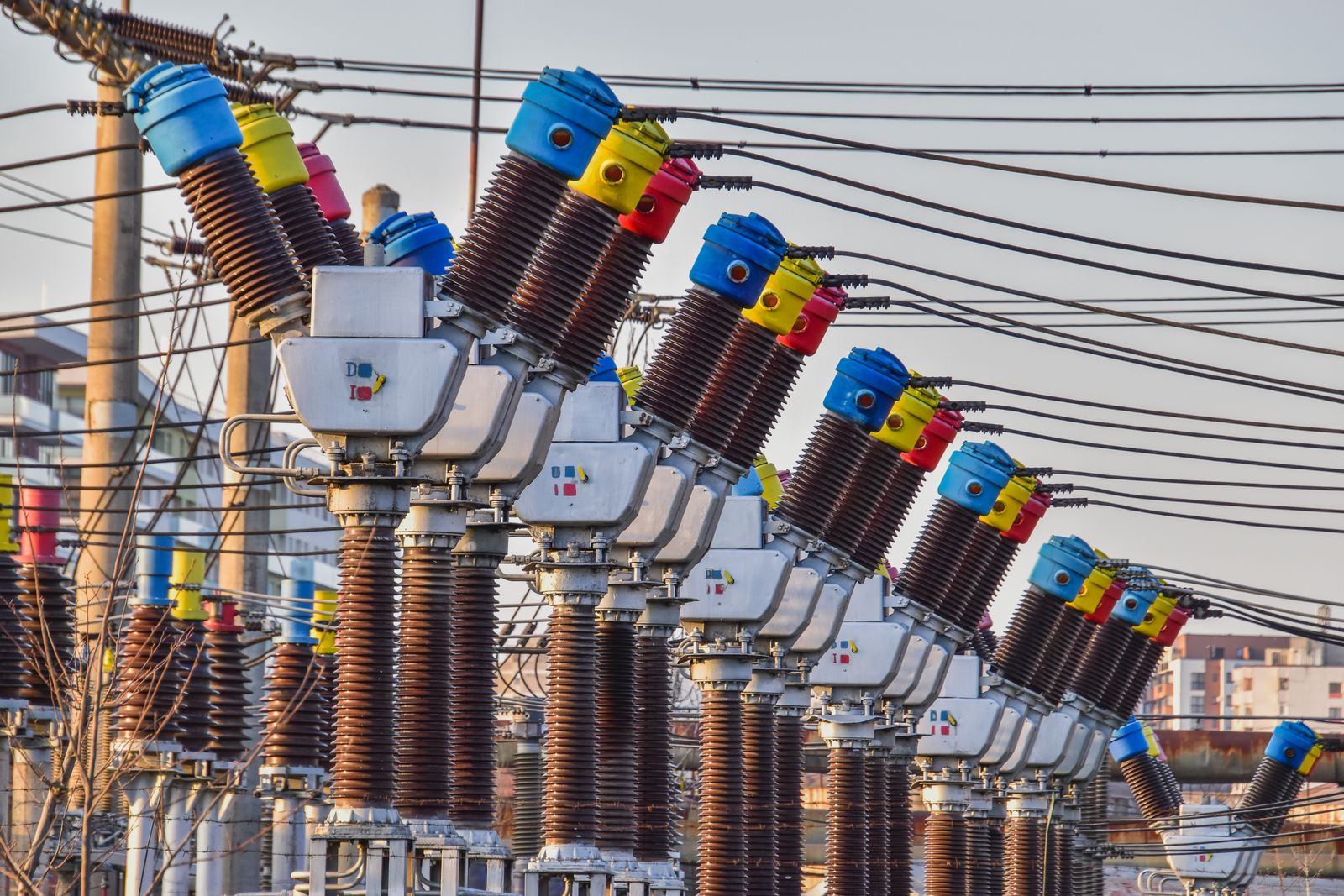
Transformers: average lead time two to three years, per the IEA. Photo: Diana / Pexels
The queue numbers are where it gets silly. In Texas, the IEA reports that ERCOT’s connection queue for large loads (about three-quarters of them data centres) was around 63 GW in December 2024, more than doubled to 130 GW four months later, and passed 230 GW by January 2026. The state’s all-time peak demand is 85 GW. Not every project in that queue will get built, but you can see the problem: the queue is now bigger than the grid it’s queuing for.
The people spending the money say the same thing out loud. On Microsoft’s October 2025 earnings call, CFO Amy Hood said the company had spent “the past few years not actually being short GPUs and CPUs per se, we were short the space or the power, is the language we use, to put them in.” Gartner’s Linglan Wang put it even more bluntly: “AI capacity is now constrained by power availability, making data center power security the new battle ground for scaling and protecting margins in the global AI race.”
If you’d rather hear it from the people who wrote the report, the IEA’s own podcast episode on it walks through the bottlenecks:
So here’s my reading. Chips set how fast the industry can grow. Power sets how fast it actually grows, and power moves at the speed of permits, steel and utility commissions, not product launches.
What it means for API prices and availability
This is the part builders actually feel, so let me separate what’s on the record from what’s my analysis.
On the record: capacity is being rationed
Rate limits are capacity management. On 26 March 2026, Anthropic’s Thariq Shihipar announced that Claude’s five-hour session limits for Free, Pro and Max subscribers would run down faster during weekday peak hours:
In a follow-up he said about 7% of users would hit limits they wouldn’t have before, and suggested shifting “token-intensive background jobs” to off-peak hours. Read that again: an AI company asking users to behave like a utility’s demand-response programme.
Six weeks later, on 6 May, Anthropic reversed the peak-hour reduction for Claude Code on Pro and Max, doubled Claude Code’s five-hour limits and raised Opus API rate limits. The reason? A deal to use all of SpaceX’s Colossus 1 data centre, which Anthropic described as “more than 300 megawatts of new capacity (over 220,000 NVIDIA GPUs).”
Notice the unit. The capacity that unlocked higher rate limits was announced in megawatts, and Anthropic’s other deals in the same post are in gigawatts (up to 5 GW with Amazon, 5 GW with Google and Broadcom). Your rate limit is, a few layers down, a power contract.
Hyperscalers are still short. Microsoft said in October 2025 that it expected to be capacity constrained through at least the end of its fiscal year. On its October 2026 call, a year later, the line was still “Customer demand continues to exceed available supply,” with some third-party GPU capacity deliveries delayed into the second half of its fiscal year.
Regional pricing already has a capacity premium. On both Amazon Bedrock and Google Cloud, Anthropic’s docs say regional endpoints for newer Claude models cost 10% more than global ones. The Google Cloud page explains why: “the premium reflects infrastructure costs for dedicated regional capacity.” Global endpoints, meanwhile, send requests “to any region with available capacity.” In plain words: if you need your tokens processed in a specific place, you pay for the privilege of that place’s scarce capacity.
My analysis: what builders should expect
The following is my read, not a forecast anyone has published:
- Rate limits will keep moving, both ways. They’ll loosen when a big site comes online and tighten when demand outruns it. Build for 429s as a normal state, not an outage.
- Data residency will keep costing extra. Regulated customers need in-region processing, and in-region capacity sits behind local grid queues. The 10% premium is the visible version of that.
- Off-peak will become a pricing concept. Peak-hour limits are already here for subscriptions. Batch APIs point the same way: Anthropic’s Message Batches API cuts costs by 50% for work that can wait, and its docs warn processing “might be slowed down based on current demand.”
- Agents make all of this worse. The IEA says reasoning, video and agentic tasks “can consume hundreds or thousands of times more energy per query than simple text generation,” and agents can run without anyone waiting on the other end. The workloads we’re most excited about are the most power-hungry ones.
A note from the Gulf
I’m writing this from Riyadh, where the power side of AI is unusually visible. The IEA says the Middle East’s total data-centre project pipeline is almost 10 GW, and that its pipeline of gigafactory-scale data centres is an order of magnitude larger than the region’s entire installed data-centre capacity today. Saudi Arabia’s HUMAIN, now owned 51% by PIF and 49% by Aramco after a deal that closed on 1 November, plans 3 GW of AI data-centre capacity by 2030. In Abu Dhabi, OpenAI’s Stargate UAE was announced as a 1 GW cluster with 200 MW expected to go live in 2026; I couldn’t find an official confirmation that the first phase is live yet, so treat that date as a promise, not a fact.
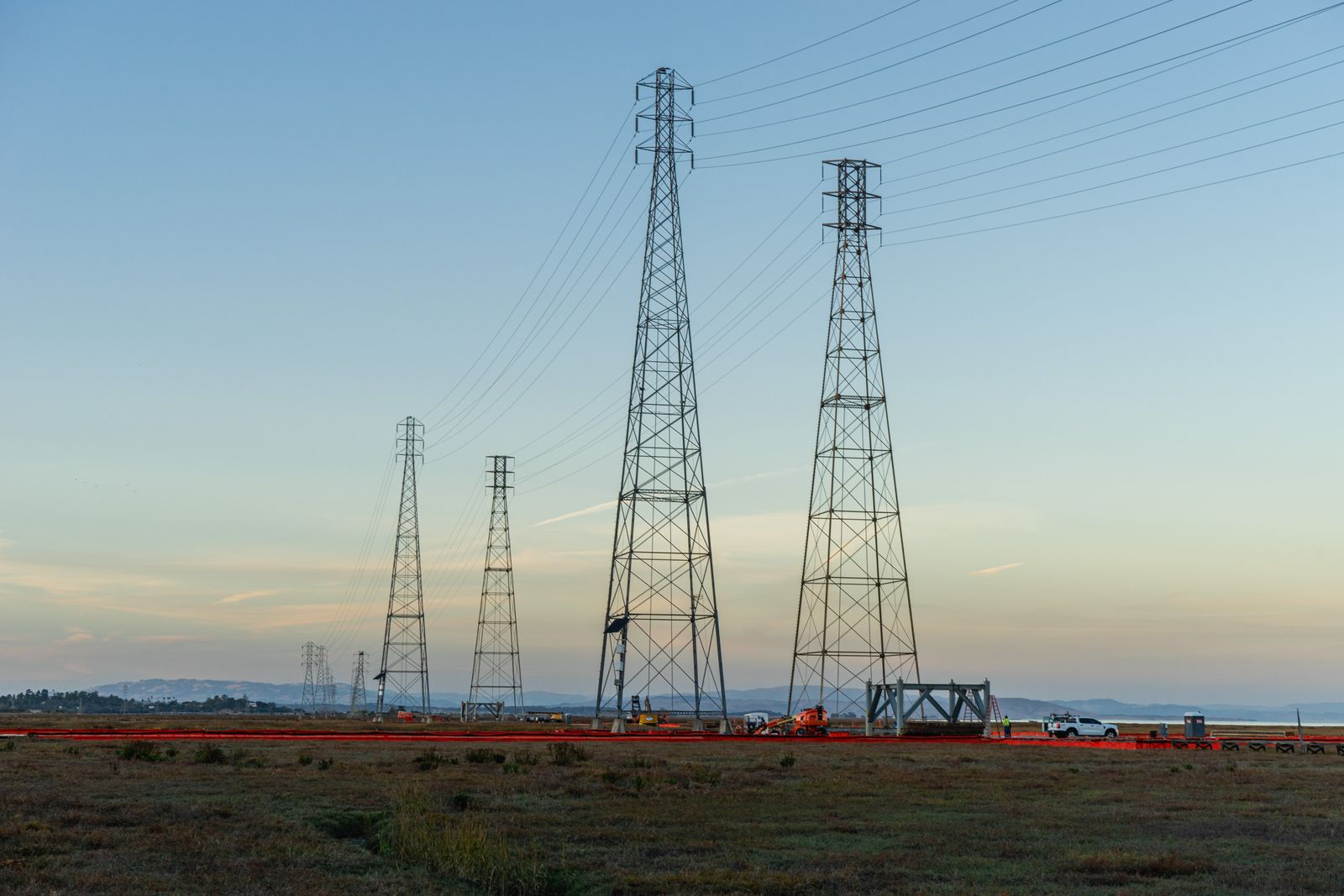
Grid connections can take five to ten years in many places. Photo: Robert So / Pexels
The pitch is simple: energy and land are the scarce inputs, and the region has both. The IEA is also clear that the pipeline is huge relative to existing infrastructure, so one cancelled or delayed project can change the outlook. Its report also flags the 2026 Middle East conflict as a supply-chain risk for data-centre inputs. Abundant power is a real edge, not a guarantee. (I wrote a teardown of HUMAIN’s agent marketplace if you want the software side of the same bet.)
The counterpoint: energy per AI task is falling fast
Now the part the doom threads tend to skip. Per task, AI is getting dramatically more efficient.
The IEA says energy use per AI task has been dropping “by at least an order of magnitude annually in recent years,” a rate it calls “unprecedented in energy history.” A simple text query now typically uses less electricity than running a TV for the same length of time.
Google has given us the best production data so far. In its August 2025 technical paper, it measured the median Gemini Apps text prompt at 0.24 Wh in May 2025, counting accelerators, host CPUs and memory, idle capacity and data-centre overhead. It also reported a 33x reduction in energy per median prompt over the 12 months to May 2025, which it credits to its software efficiency work. That 0.24 Wh is, in Google’s words, less energy than watching nine seconds of television.
So why is total demand still exploding? Two reasons, both from the IEA:
- Jevons paradox. Cheaper, more efficient AI gets used more, so total consumption still rises.
- Task inflation. The median chat prompt got 33x cheaper, but the industry moved on to reasoning models and agents that burn far more tokens per job.
Efficiency is real. It just isn’t winning the race against demand yet.
Take: efficiency is becoming a product feature
Here’s the hot take: in a power-constrained world, efficiency stops being an ops metric and becomes a feature customers notice, even if they never hear the word “watt.”
The providers already talk this way. Satya Nadella described Microsoft’s goal on the October 2025 call as “maximizing tokens per dollar per watt.” The IEA makes the same point from the other side: picking the right-sized model and saving heavy generation for when it adds clear value “can substantially reduce operational energy demand,” but competition and user expectations push teams to over-provision.
That gap is your opportunity. If your product does the same job with a smaller model, fewer agent steps and a cache, you get:
- More headroom under the same rate limit, so fewer 429s for your users.
- Lower and steadier bills when prices or limits change.
- Better latency, because small models and cache hits are fast.
- Cheaper residency, because the 10% regional premium applies to fewer tokens.
In practice, that looks like this:
# Task-aware routing: cheapest model that can do the job, cache first,
# heavy models only when the task earns it.
def route(task):
    if cached := cache.get(task.fingerprint):
        return cached
    if task.kind in {"classify", "extract", "summarise_short"}:
        model = "small"
    elif task.kind in {"draft", "code_edit"}:
        model = "mid"
    else:
        model = "frontier"   # reasoning / multi-step agent work
    if not task.urgent:
        return batch_queue.submit(task, model)   # off-peak, often discounted
    return call_with_fallback(task, model, on_429="downgrade_or_retry")
None of that is new engineering. What’s new is the why. Model routing and gateways (I covered the main ones in The Agent Builder’s Stack) used to be about saving money. Now they’re also about staying available when your provider is rationing capacity.
And for agents specifically: developers already keep them on a leash for trust reasons. Add energy to the list. An agent that takes four steps instead of forty is cheaper, quicker and easier to check.
My prediction, loosely held: within a year, “runs on a smaller model” will show up on product pages the way “works offline” once did. Not because buyers care about kilowatt-hours, but because the efficient product will be the one that’s still responsive at 2pm on a weekday. The AI boom isn’t running out of ideas or chips. It’s running into the grid. Build like electricity is the scarce input, because right now it is.
Frequently asked questions
How much electricity do data centres use in 2026?
Gartner forecasts worldwide data-centre electricity consumption of 565 TWh in 2026, up 26% from 447 TWh in 2025. The IEA uses a different method and put 2025 consumption at 485 TWh, rising to about 950 TWh by 2030, roughly 3% of global electricity demand.
Is AI limited by chips or by power?
Both, on different timescales. The IEA says high-bandwidth memory became a binding constraint on AI server production in late 2025 and early 2026, but a new chip factory takes about two years. Transformers take two to three years, gas turbines around five and grid connections up to five to ten years in many places, so power is the slower bottleneck.
Why do AI API rate limits change so often?
Rate limits are how providers ration scarce capacity. Anthropic tightened Claude's peak-hour session limits in March 2026 to manage demand, then doubled Claude Code's five-hour limits and raised Opus API limits in May 2026 after signing for more than 300 MW of new compute.
Why do regional AI endpoints cost more?
In-region capacity is scarcer than pooled global capacity. Anthropic's docs say regional Claude endpoints on Amazon Bedrock and Google Cloud cost 10% more than global ones, and the Google Cloud page says the premium reflects infrastructure costs for dedicated regional capacity.
Is AI getting more energy efficient?
Yes, per task. The IEA says energy per AI task has fallen by at least an order of magnitude a year recently, and Google measured the median Gemini Apps text prompt at 0.24 Wh in May 2025, 33 times less than a year earlier. Total demand still rises because usage grows and reasoning and agent tasks use far more energy per job.
How much AI data-centre capacity is planned in the Middle East?
The IEA says the Middle East's data-centre project pipeline is almost 10 GW, far larger than the region's installed capacity today. Saudi Arabia's HUMAIN plans 3 GW of AI data-centre capacity by 2030, and OpenAI announced Stargate UAE as a 1 GW cluster with 200 MW expected in 2026.
Sources
- Key Questions on Energy and AI (report, April 2026) International Energy Agency
- Key Questions on Energy and AI: Executive summary International Energy Agency
- Key Questions on Energy and AI (full PDF) International Energy Agency
- Data centre electricity use surged in 2025, even with tightening bottlenecks driving a scramble for solutions International Energy Agency
- Podcast episode: The relationship between energy and AI is evolving rapidly International Energy Agency (YouTube)
- Gartner Says Data Center Electricity Consumption to Grow 26% in 2026 Gartner
- Gartner: Data center electricity consumption to grow 26% in 2026 Network World
- Microsoft Fiscal Year 2026 First Quarter Earnings Conference Call (29 Oct 2025) Microsoft
- Microsoft Fiscal Year 2027 First Quarter Earnings Conference Call (28 Oct 2026) Microsoft
- Thariq Shihipar on X: adjusting Claude five-hour session limits during peak hours X
- Thariq Shihipar on X: ~7% of users will hit session limits; shift background jobs off-peak X
- Higher usage limits for Claude and a compute deal with SpaceX Anthropic
- Claude on X: partnership with SpaceX to increase compute capacity X
- Claude Models on Google Cloud (Google managed): global, multi-region and regional endpoints Anthropic
- Claude in Amazon Bedrock: regions and endpoint types Anthropic
- Message Batches API Anthropic
- Measuring the environmental impact of delivering AI at Google Scale Google (arXiv)
- Measuring the environmental impact of AI inference Google Cloud
- PIF and Aramco close HUMAIN transaction to accelerate HUMAIN's global growth Aramco
- Introducing Stargate UAE OpenAI
Found this useful?
Clap (up to 50×) so more people find it.
Keep reading

Personal agents explained: Muse vs Grok Bot vs Duet vs dots
What a personal agent is, the eight-box architecture they all share, what people use them for, how the big four compare, and why it all traces back to a lobster called Clawdbot.

Your next website visitor is an AI agent
AI agents now browse, compare and buy for people. I sent agent-labelled requests to six big retailers, and over half hit a wall. The fix is verification, not open doors.

The EU AI Act wasn't delayed for you
The Digital Omnibus pushed high-risk AI rules to 2027, but chatbot disclosure, content marking and deepfake labels already apply. What Article 50 means for builders and publishers, plus a one-page checklist.